The ocean covers 71% of Earth’s surface and contains about 97% of the planet’s water. Yet more than 80% of it has never been mapped, observed, or explored. What humans do know about the deep sea comes largely from the last century of research — a blink of time against the ocean’s 3.5-billion-year history. And even the parts that have been studied reveal systems so complex, so alien to everyday experience, that they challenge most people’s assumptions about what the ocean actually is.
The popular image of the ocean tends to flatten it into a single thing: a vast, blue expanse of saltwater where fish swim and waves break on shore. But the ocean is not one environment — it is hundreds of them, stacked vertically and spread horizontally, each with its own chemistry, pressure, temperature, and community of life. The surface layer is sun-warmed and photosynthetically productive. Below that lies the twilight zone, where bioluminescent creatures patrol in near-darkness. Deeper still is the midnight zone, where no light penetrates at all and pressures exceed 1,000 times what humans experience at sea level. And below that, in trenches that plunge nearly 11 kilometers down, life still persists — strange, sparse, and largely unknown.
What happens in those depths, and in the open ocean far from any shore, includes processes that shape the global climate, produce much of the oxygen in every breath, and drive food webs that feed billions of people. The ocean is not passive backdrop. It is the engine of the planetary system — cycling carbon, distributing heat, producing weather, and absorbing consequences that come from human activity on land.
The 25 entries in this list span biology, chemistry, geology, and physics. Some describe behaviors that scientists have observed directly. Others describe large-scale processes that can only be understood through instruments, models, and decades of measurement. All of them describe something that is genuinely happening — right now, at depth, far from shore — in a part of the planet that most people will never see.
The ocean produces about half of the world’s oxygen
The oxygen in every breath does not come only from forests and land plants. About half of Earth’s oxygen is produced in the ocean, primarily by phytoplankton — microscopic, plant-like organisms that drift in the upper layers of the sea. These single-celled organisms use sunlight and carbon dioxide to photosynthesize, releasing oxygen as a byproduct in exactly the way land plants do.
Phytoplankton are found in virtually every part of the ocean’s sunlit surface layer, called the photic zone, which extends to roughly 200 meters depth. Within that zone, they form the base of nearly all marine food webs. Zooplankton eat phytoplankton. Small fish eat zooplankton. Larger fish eat smaller fish. The entire pyramid of ocean life depends on organisms too small to see with the naked eye.
The scale of phytoplankton activity is difficult to overstate. Globally, phytoplankton remove enormous quantities of carbon dioxide from the atmosphere through photosynthesis, and they produce oxygen at a rate that sustains the atmosphere’s breathable composition. Some estimates credit a single genus of ocean bacteria, Prochlorococcus, with producing 20% of the oxygen in every breath. It is one of the most abundant photosynthetic organisms on Earth and was only discovered in 1986.
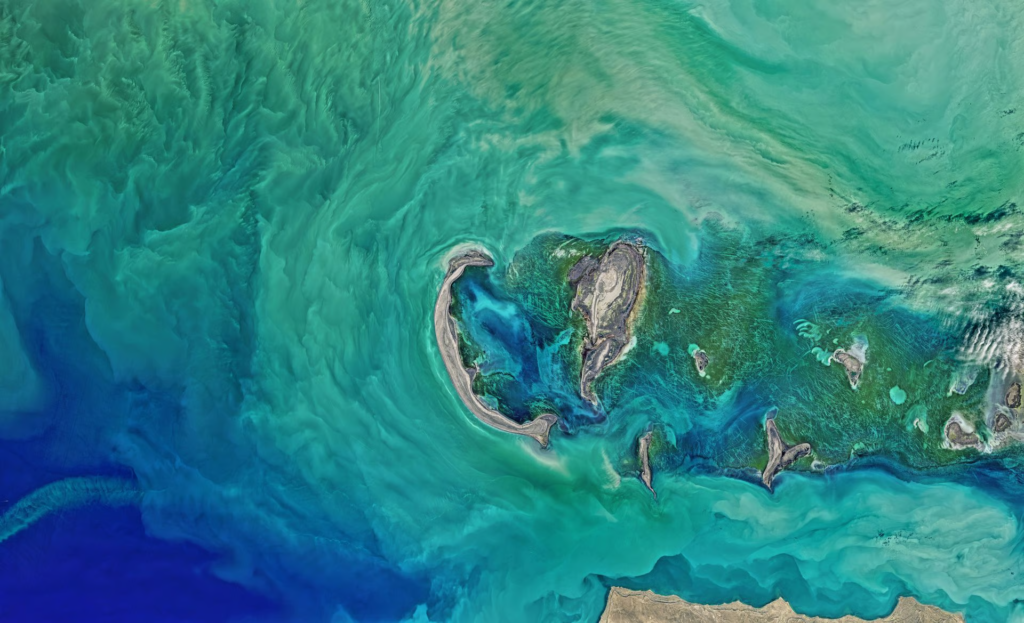
Phytoplankton populations are sensitive to ocean temperature, nutrient availability, and light. When conditions are right, they bloom — reproducing so rapidly that the blooms become visible from satellites as swirls of green and turquoise across the ocean surface. These blooms can stretch for hundreds of kilometers. When conditions deteriorate, populations crash, which has cascading effects throughout the food web.
Warming ocean temperatures are already affecting phytoplankton distributions globally. Warmer water stratifies more easily, reducing the upwelling of cold, nutrient-rich water from the deep that phytoplankton depend on. This connection between ocean temperature and oxygen production is one reason marine scientists pay close attention to surface warming trends — the implications extend well beyond the ocean itself.
There are rivers and lakes inside the ocean
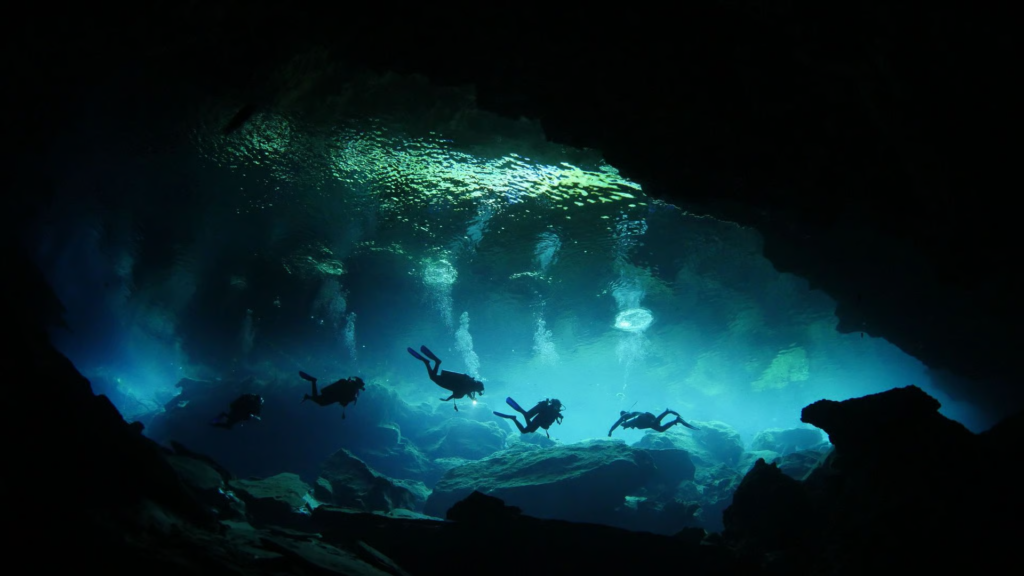
The ocean floor hosts bodies of water that behave like rivers and lakes — complete with banks, shores, and even waves — but exist entirely within the surrounding seawater. These are called brine pools, and they form when ancient salt deposits buried beneath the seafloor dissolve and seep upward, creating water so dense with dissolved salt that it doesn’t mix with the seawater above it.
The result is a distinct liquid layer sitting on the ocean floor, visible as a clear boundary. When underwater vehicles approach brine pools, cameras show what looks unmistakably like a shoreline — a defined edge where the brine meets the overlying water. Waves form on the surface of the brine just as they do on a sea surface, generated by currents passing overhead.
Brine pools are typically found at depths of 1,000 to 3,500 meters, concentrated in areas of geological activity such as the Gulf of Mexico and the Red Sea. The Orca Basin in the Gulf of Mexico is one of the most studied examples, a brine pool roughly 10 kilometers long sitting at about 2,400 meters depth. Brine pools in the Red Sea have temperatures exceeding 60°C due to geothermal heating, making them among the most extreme environments on Earth.
Most brine pools are anoxic — they contain no dissolved oxygen — and the water is toxic to most marine life. Fish and crustaceans that accidentally cross into a brine pool are killed almost immediately. Their preserved bodies often accumulate along the edges, creating what researchers sometimes call “lakes of death.”
But life does exist in brine pools. Microbial communities, including bacteria and archaea, thrive in the hypersaline conditions where other life cannot survive. Some researchers study these communities as analogs for life in extreme environments elsewhere in the solar system — places like the subsurface oceans of Jupiter’s moon Europa, where high salinity and unusual chemistry may produce similar conditions.
Dead whales become entire ecosystems on the ocean floor
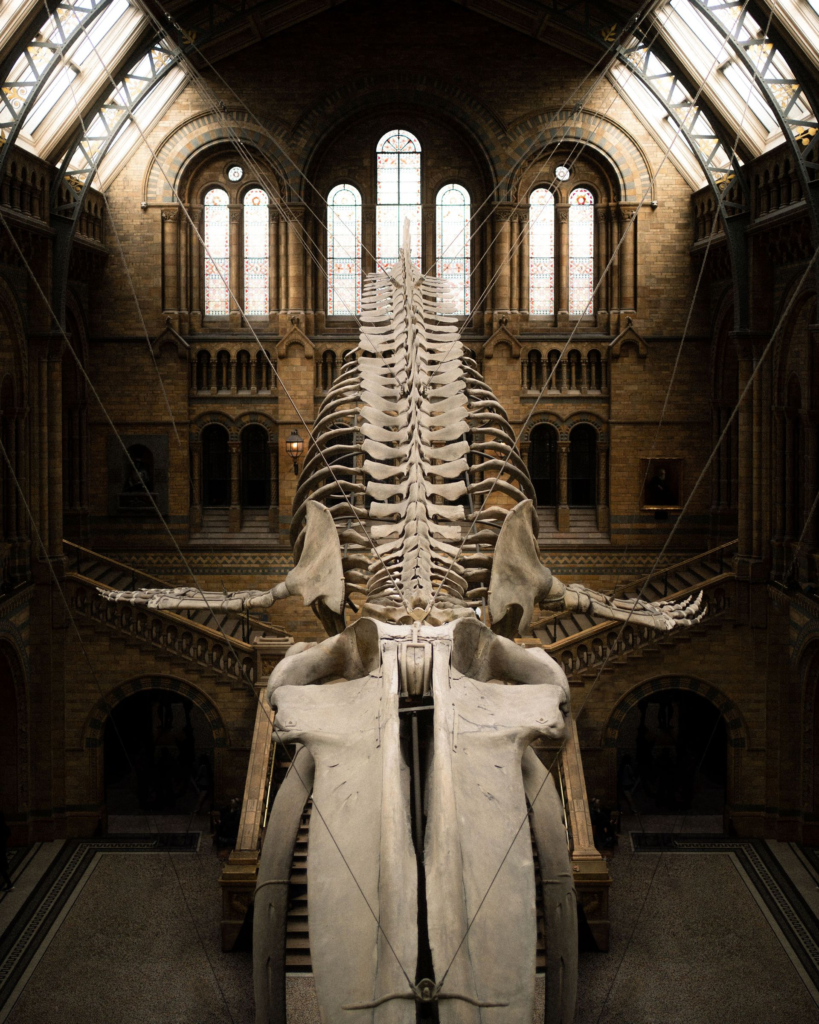
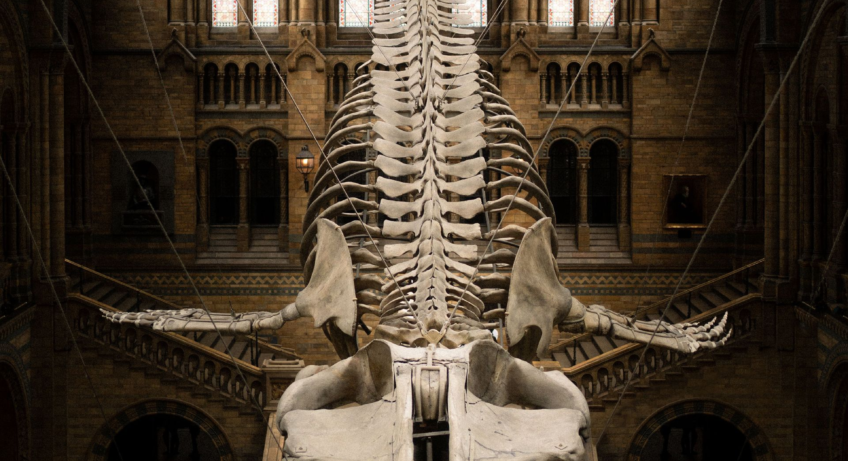
When a whale dies at sea and its body sinks to the ocean floor, it creates something called a whale fall — a concentrated source of organic material in an environment that is otherwise extremely nutrient-poor. The process by which a whale carcass is consumed takes decades and proceeds through distinct ecological stages, each dominated by different communities of organisms.
In the first stage, lasting months to a couple of years, mobile scavengers arrive: sleeper sharks, hagfish, rattail fish, and various crustaceans. These animals strip the carcass of soft tissue rapidly. A large whale may carry 40 to 60 tons of organic material, and the feeding activity at a whale fall can be intense, with dozens of species feeding simultaneously.
In the second stage, smaller organisms colonize the bones and the sediment around the carcass. Polychaete worms, crustaceans, and mollusks exploit the remaining nutrients. This phase can last several years.
The third stage, called the sulfophilic stage, is the most unusual and the most prolonged. Bacteria begin to break down the lipid-rich whale bones themselves. This process releases hydrogen sulfide, which chemosynthetic bacteria then use as an energy source — the same mechanism that powers hydrothermal vent communities. The result is a miniature chemosynthetic ecosystem on the seafloor, sustained not by a vent but by a whale skeleton.
This stage can last 50 to 100 years for a large whale. The organisms found in these sulfophilic communities are often specialists found nowhere else. Some species have only ever been discovered on whale falls. The skeletons of great whales are rich enough in lipids to sustain entire communities across timescales that span human generations.
Whale falls are also thought to serve as stepping stones for deep-sea species. Some organisms move between hydrothermal vents and other chemosynthetic environments; whale falls scattered across the ocean floor may provide the habitat connections that allow these species to disperse.